
When a property can’t accommodate a conventional gravity-fed septic system, a pressure dosing system can provide another way to move wastewater to the drainfield. But that doesn’t always mean the entire drainfield needs to be pressurized.
In some septic system designs, pressure dosing and gravity distribution can be used together: A pump moves the wastewater to a higher elevation, then gravity distributes it through the drainfield. This approach can reduce the amount of pressurized equipment needed and, in the right circumstances, provide a more cost-effective solution than fully pressurizing the drainfield.
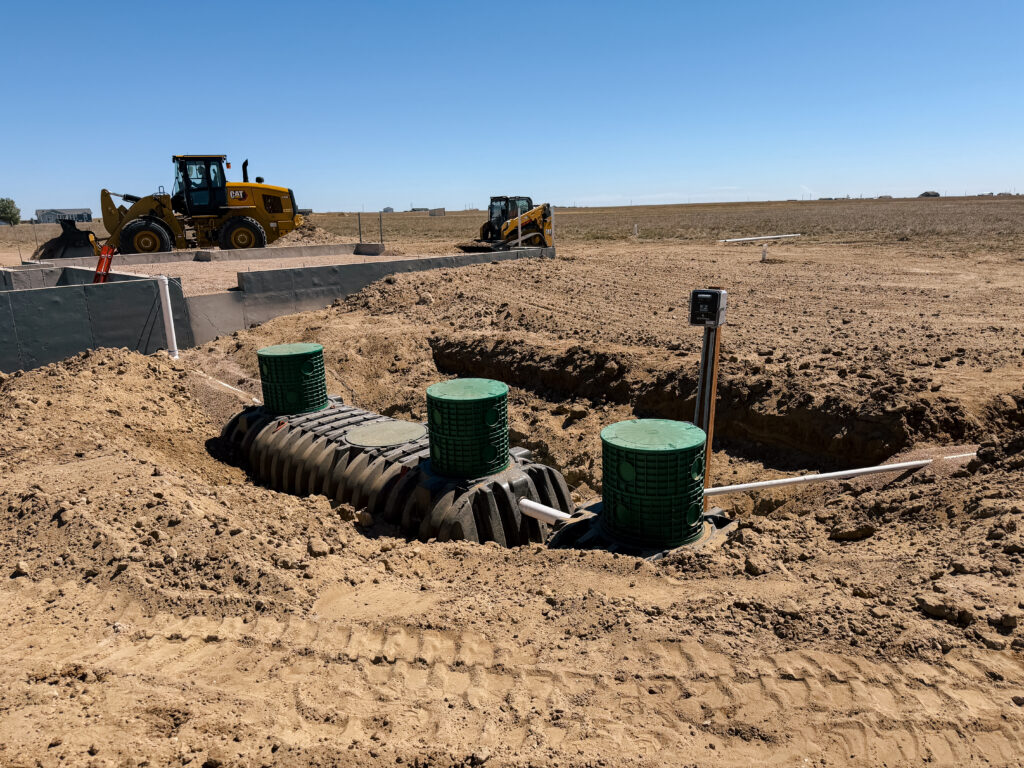
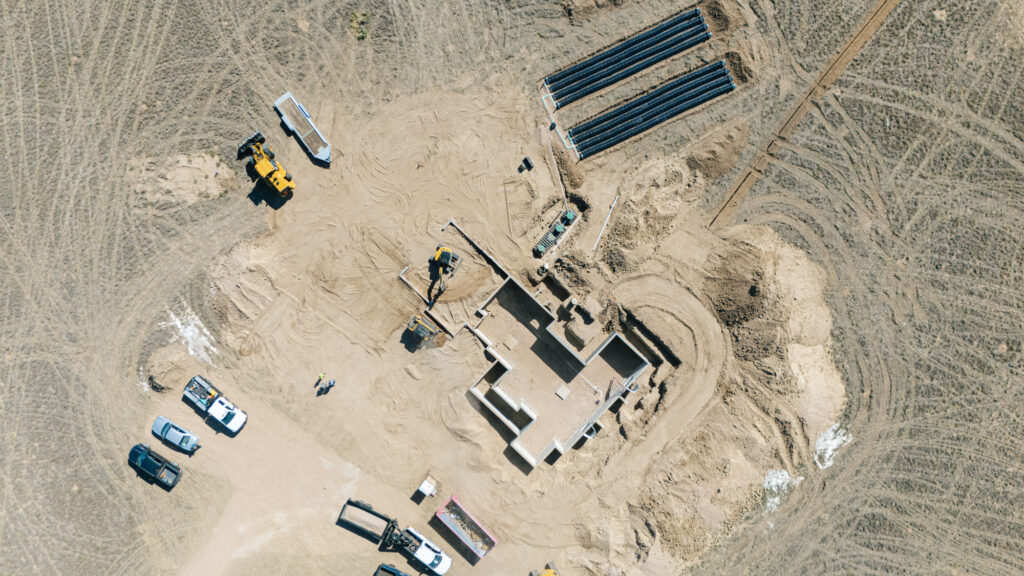
We recently used this approach for a septic installation in Pierce, Colorado where the site’s specific conditions—a limiting layer of sand and gravel at approximately 5 feet deep—called for a specially engineered septic design. You can learn more about that project in our case study.
Why Some Septic Systems Can’t Rely Entirely on Gravity
A conventional gravity septic system relies on elevation to move wastewater from the septic tank to the drainfield. If the drainfield sits higher than the tank, or site conditions prevent the drainfield from being installed at the necessary elevation, gravity alone may not be enough.
Soil conditions can also affect where the drainfield can be installed. A limiting layer is a soil or groundwater condition that restricts where a septic system’s leach field can be placed. For example, a layer of sand and gravel at a certain depth may prevent the leach field from being installed deeper in the soil.
When these conditions prevent gravity from working, a pump can move wastewater to the elevation where the drainfield needs to be located.
Does the Entire Drainfield Need to Be Pressurized?
Not always. A fully pressurized drainfield uses a pump to distribute wastewater through a network of pressurized pipes throughout the treatment area. This can provide controlled distribution when the site requires it.
However, you can often bypass a fully pressurized system by using a single pump to move the wastewater up to the drainfield, where it will then be distributed by gravity to the rest of the field. This creates a hybrid approach that combines the two systems: Pressure dosing gets the wastewater where it needs to go. Gravity distributes it through the drainfield.
How a Hybrid Pressurized & Gravity Septic System Works
- Wastewater leaves the septic tank.
The wastewater is treated in the septic tank as it would be in a conventional system. - A pump moves it uphill.
If the drainfield or distribution box sits at a higher elevation, a lift station pumps the wastewater to that location. - The wastewater enters a distribution box.
The distribution box divides the flow between the different sections of the drainfield. - Gravity takes over.
Once the wastewater reaches the appropriate elevation, it can flow through the drainfield by gravity rather than remaining under pressure.
Can Combining the Two Systems Save Money?
A fully pressurized drainfield can require additional equipment and components throughout the treatment area. Depending on the design, this may include pressurized piping, valves, flushing assemblies, and other components. If the site can support gravity distribution after the wastewater has been lifted to the correct elevation, those components may not be necessary throughout the entire drainfield.
So, a hybrid system can then allow for:
- A smaller pump
- Less pressurized piping
- Fewer pressure-distribution components
- Lower installation costs in some situations
When Does This Approach Make Sense?
Combining pressure dosing and gravity distribution makes sense when:
- The drainfield needs to sit higher than the septic tank
- A limiting soil layer affects the allowable drainfield depth
- The site can still support gravity distribution within the drainfield
- A fully pressurized system would add components that aren’t necessary for the site’s conditions
- The approved septic design allows for this type of system
If you’re dealing with a property where a conventional gravity system isn’t feasible, start with a site evaluation to find out if this could be a solution for you.
Need a Septic System Solution for a Challenging Property?
Talk with our team about your site and we’ll help you understand your options, including whether a combination of pressure dosing and gravity distribution could work for your project.
Ace Septic & Excavation is a septic contractor serving the Northern Colorado Front Range, including Weld, Larimer, Boulder, and Jefferson Counties. For more information or for a septic inspection, reach out to us at 970.342.0214 or send us a message.